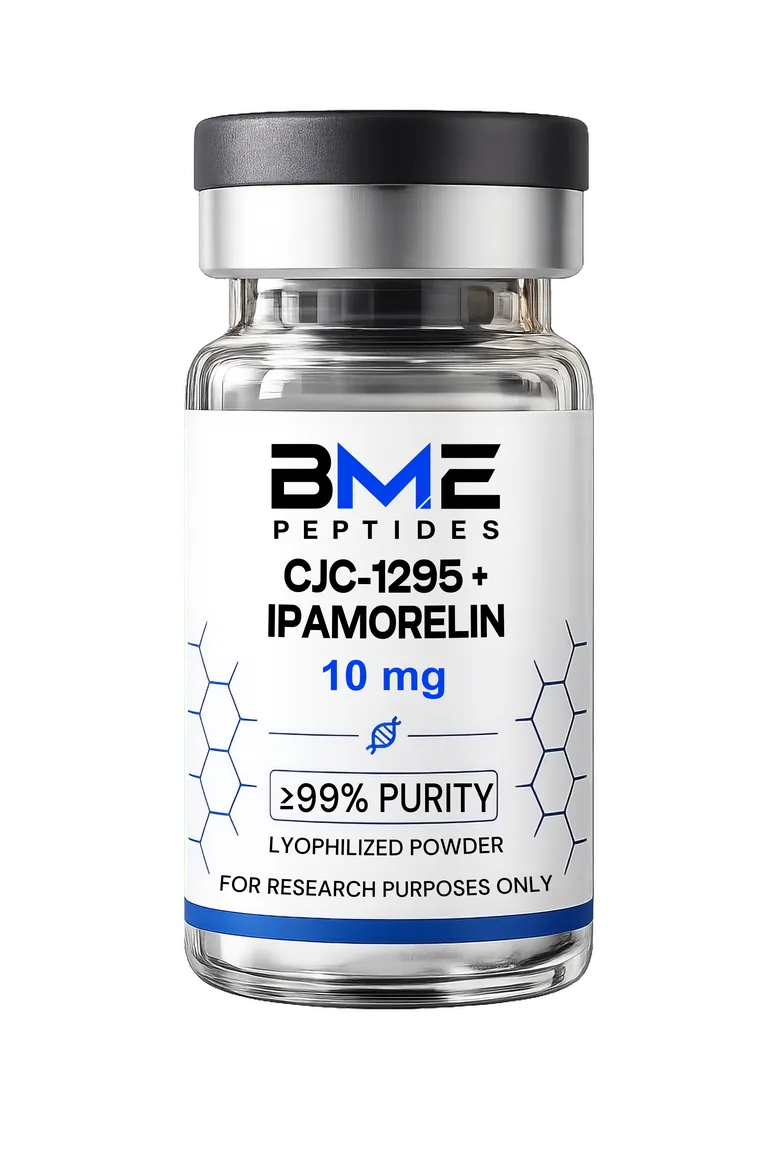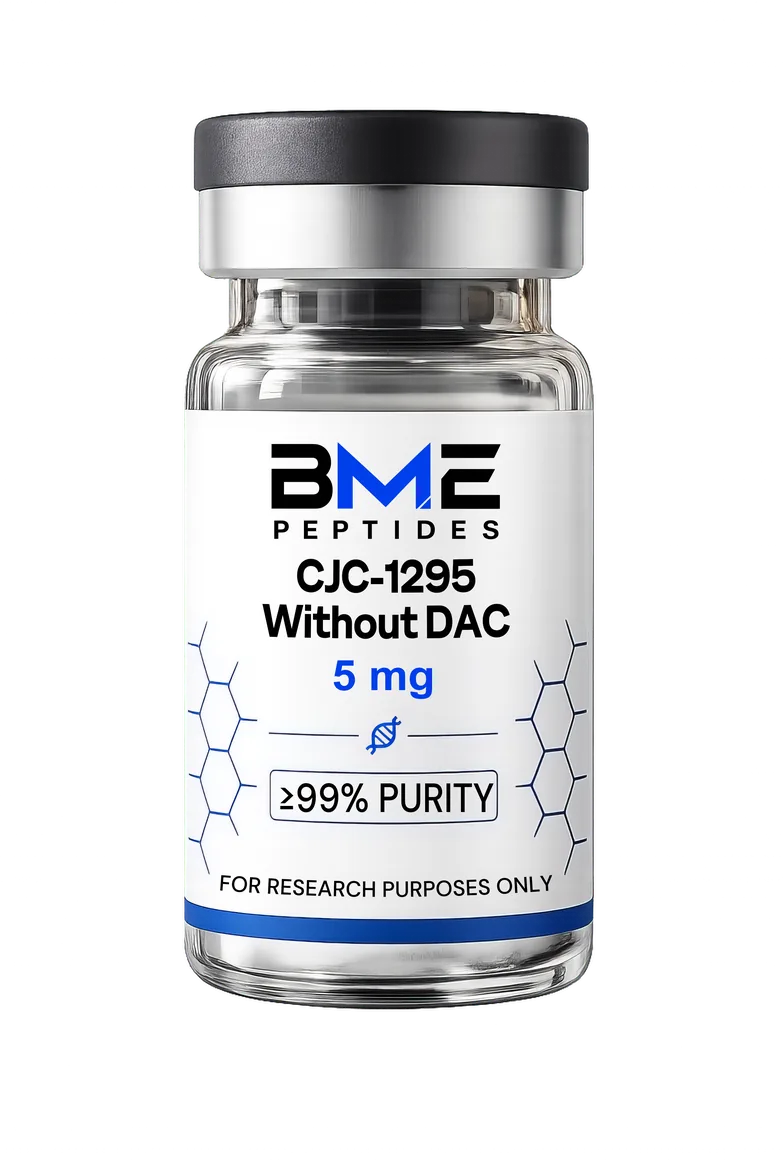
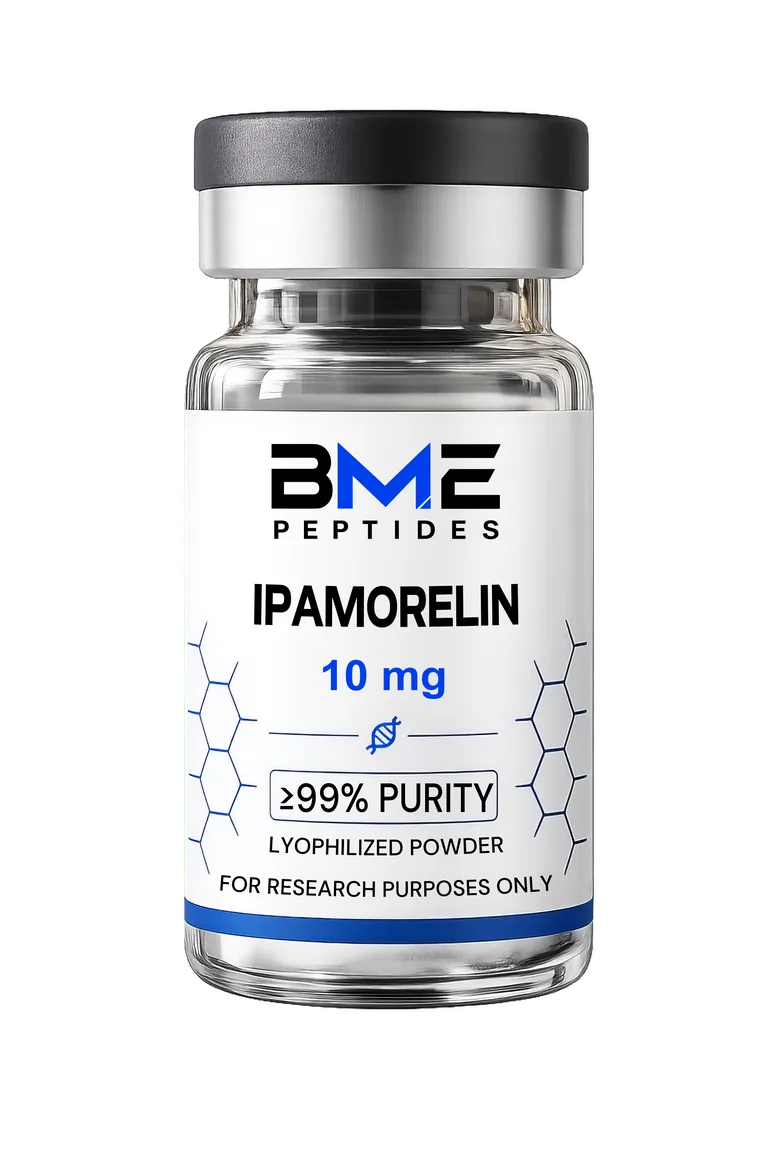
Ipamorelin is a synthetic pentapeptide designed to stimulate the release of growth hormone from the pituitary gland. It does this by activating a receptor called GHS-R1a — the same receptor that the appetite-regulating hormone ghrelin uses — but with a degree of selectivity that has made it a useful research tool for studying growth hormone axis signaling. Researchers find it interesting partly for what it does, and partly for what it does not do: compared to some earlier growth hormone secretagogues, ipamorelin appears to have limited effects on cortisol and prolactin at research doses, which makes it a cleaner model compound for isolating GH-specific effects.
The compound is not an approved therapeutic drug in any major market. It sits firmly in the research space, where it has been studied in the context of growth hormone biology, body composition, and pituitary pharmacology. Ipamorelin is supplied by BME Health as a research compound for laboratory use only.
1. What Is Ipamorelin?
Ipamorelin is a pentapeptide — a chain of five amino acids — with the sequence Aib-His-D-2-Nal-D-Phe-Lys-NH₂. It was developed in the 1990s as part of research into growth hormone secretagogues (GHS), a class of compounds that stimulate GH release through the ghrelin receptor pathway rather than through the hypothalamic growth hormone-releasing hormone (GHRH) pathway that compounds like sermorelin target.
The distinction matters to researchers. GHRH analogues like sermorelin work upstream, stimulating the hypothalamus to release GHRH, which then acts on the pituitary. Ipamorelin acts directly at the pituitary (and in the hypothalamus) through GHS-R1a, a G-protein coupled receptor. The two pathways can be studied independently or in combination, and compounds like CJC-1295 (no DAC) — a GHRH analogue — are sometimes co-administered with ipamorelin in research protocols designed to examine additive or synergistic effects on GH pulse dynamics, a topic covered in the CJC-1295 and ipamorelin combination research overview.
In preclinical pharmacology studies, ipamorelin produced dose-dependent GH release in rats, with peak plasma GH levels reached within 15–30 minutes of administration and returning to baseline within approximately 3 hours. The compound has a relatively short plasma half-life — estimated at around two hours in animal models — which is relevant to how it has been used as a research tool for studying pulsatile GH dynamics.
2. Why Ipamorelin Gets So Much Research Attention
Growth hormone secretagogues as a research class have attracted attention for several decades, stemming from the discovery that GH pulses could be pharmacologically triggered and studied in controlled settings. Ipamorelin occupies a particular niche within that class because of its receptor selectivity profile.
Earlier peptide secretagogues — including GHRP-2 and GHRP-6 — also activate GHS-R1a, but they tend to produce more substantial cortisol and prolactin responses alongside GH release. Ipamorelin's narrower effect on those hormones has made it a preferred research tool in studies where researchers want to examine GH-specific downstream effects without the confounding influence of concurrent cortisol changes. This selectivity was a key finding in the early Novo Nordisk research that characterized the compound, and it remains one of its primary points of scientific interest.
The GH axis itself is a research area of broad relevance. Growth hormone influences protein synthesis, fat metabolism, bone density maintenance, and aspects of body composition. All of these areas have active research programs, and compounds that can modulate GH secretion in a controllable way are useful tools for investigators studying those systems. Ipamorelin's predictable and transient GH-releasing effect makes it particularly suitable for that kind of experimental work.
3. Growth Hormone Release and Pituitary Signaling
The foundational research establishing ipamorelin's profile was conducted in the late 1990s. In rat studies, ipamorelin produced specific and reproducible GH release through GHS-R1a activation, with an effect size comparable to GHRP-6, while generating markedly smaller increases in cortisol and prolactin than GHRP-6 at equivalent doses. Researchers characterized this as evidence of greater receptor selectivity, as described in reviews covering investigational GH secretagogues.
Ipamorelin has been used in research designs examining GH pulse characteristics — timing, amplitude, and frequency — and how these relate to downstream IGF-1 production and anabolic signaling. Because it produces a clean, time-limited GH pulse, it allows researchers to study GH's effects on downstream variables without the sustained, pharmacologically extended GH elevation produced by some other compounds.
4. Body Composition Research
One of the areas where GH secretagogues including ipamorelin have attracted sustained research interest is body composition — specifically, the relationship between GH levels, lean mass, and fat distribution. GH promotes lipolysis (fat breakdown) and has anabolic effects on skeletal muscle protein synthesis, and age-related GH decline has been proposed as a contributing factor to the shift in body composition typically seen in older adults.
Preclinical research using ipamorelin and related GH secretagogues has examined effects on lean mass accrual, adipose tissue, and bone density in animal models. These findings are research observations in experimental contexts; they have not been established as clinical endpoints in approved human therapies, and significant uncertainties remain about how to translate them to human applications. This is an important distinction in a research area that attracts considerable interest beyond pure science.
Because of its role in GH and IGF-1 axis modulation, ipamorelin is listed on the World Anti-Doping Agency (WADA) Prohibited List under the category of peptide hormones, growth factors, and related substances. This prohibition applies to competitive athletes in sports governed by WADA rules. Any research context where ipamorelin is studied must account for this regulatory and anti-doping status.
5. Gastrointestinal Research
An interesting secondary area of investigation for GH secretagogues involves GI motility. The ghrelin receptor (GHS-R1a) is expressed not only in the pituitary and hypothalamus but also in the gastrointestinal tract, where ghrelin itself plays a role in gut motility. Studies examining GHS-R1a agonists including ipamorelin in the context of postoperative ileus and GI motility have been conducted, based on the hypothesis that activating this receptor might promote GI muscle activity. This represents a mechanistically distinct application from the GH-release research and illustrates the breadth of GHS-R1a biology.
6. How It Works
Ipamorelin's mechanism centers on GHS-R1a, a G-protein coupled receptor expressed in the hypothalamus, pituitary, and peripheral tissues. When ipamorelin binds GHS-R1a on somatotroph cells in the anterior pituitary, it activates a signaling cascade (primarily through Gq/11) that triggers calcium mobilization and the exocytosis of stored GH. This mechanism is distinct from, but functionally complementary to, GHRH receptor signaling — the two pathways converge on GH release through different intracellular routes.
The selectivity profile researchers find notable is partly attributable to ipamorelin's design. Unlike GHRP-6, which also activates receptors related to ACTH and cortisol release, ipamorelin's structural modifications appear to reduce binding at those off-target sites. This makes the resulting GH pulse more isolated from concurrent adrenocortical activation.
After peak GH release, ipamorelin is cleared relatively quickly — its short half-life means the stimulatory effect is transient, with GH levels typically returning to baseline within a few hours. This transient profile contrasts with longer-acting compounds like CJC-1295 with DAC,
which produces extended GH elevation through a different pharmacokinetic approach. Researchers choose between these profiles depending on what aspect of GH biology they are studying.
7. What Researchers Are Still Learning
The most significant open question for ipamorelin — as with most peptide secretagogues — is human clinical translation. Most of the published research involves animal models or small exploratory studies. The compound's pharmacology in humans, the dose-response relationship for GH stimulation in different populations, and the downstream functional effects of ipamorelin-induced GH pulses in human subjects are all areas where the evidence is limited compared to the preclinical literature.
Safety data in humans is similarly restricted. The tolerability data that exists comes primarily from small studies and animal work; comprehensive Phase II and III safety and efficacy data in human populations is not available in the public literature. This gap between robust preclinical pharmacology and limited human data is characteristic of the peptide secretagogue field broadly — not a unique feature of ipamorelin, but a real constraint on the conclusions that can currently be drawn.
There is also ongoing research interest in the optimal timing and context for GH secretagogue administration in research models. Because GH secretion is naturally pulsatile and regulated by a complex hypothalamic-pituitary feedback loop, the timing of exogenous stimulation relative to the endogenous rhythm matters for interpreting results. Research has explored how pretreatment with somatostatin (which suppresses GH release) affects ipamorelin's stimulatory response, providing insight into the feedback mechanisms governing the GH axis.
The ghrelin receptor's wide tissue expression also means that investigators need to account for potential off-target effects in peripheral tissues — including cardiac, gastrointestinal, and metabolic effects — when designing research protocols, even if these are less prominent than the pituitary effects.
Researchers studying the GH secretagogue class more broadly will find useful context in the sermorelin article, which covers the GHRH analogue approach, and the CJC-1295 and ipamorelin combination overview, which examines research into the combined use of GHRH and GHS-R1a agonist pathways.
8. Research Status and Sourcing
Ipamorelin is not approved as a drug by the FDA, EMA, or Health Canada. It has been reviewed in FDA compounding discussions, but does not hold approved therapeutic status. Health Canada explicitly lists ipamorelin among injectable peptides sold illegally and notes that "for research use only" labeling does not exempt products from Canadian drug regulations.
As noted above, ipamorelin is on the WADA Prohibited List. This applies in the context of competitive sport under WADA-governed rules.
Ipamorelin is available from BME Health in 5 mg and 10 mg formats, supplied as a research compound for laboratory use only.
This article is for educational and research purposes only and is not medical advice.
9. Frequently Asked Questions
What is ipamorelin? Ipamorelin is a synthetic pentapeptide that acts as a selective agonist at the ghrelin receptor (GHS-R1a), stimulating the release of growth hormone from the anterior pituitary. It was developed as a research tool for studying growth hormone axis signaling and is not an approved therapeutic drug. Reviews covering investigational GH secretagogues describe its pharmacology in detail.
How does ipamorelin work? It binds GHS-R1a receptors on pituitary somatotroph cells, triggering intracellular calcium signaling that results in growth hormone release. It also acts at hypothalamic GHS-R1a receptors. The mechanism is distinct from GHRH receptor agonists like sermorelin, and the two pathways can produce additive effects on GH release when combined.
Is ipamorelin a growth hormone secretagogue? Yes. Ipamorelin belongs to the growth hormone secretagogue class — compounds that stimulate GH release by activating the ghrelin receptor, rather than by mimicking GHRH. Its profile within this class is characterized by relatively selective GH stimulation with limited concurrent effects on cortisol and prolactin compared to older secretagogues like GHRP-6.
What has ipamorelin been studied for? Research has examined ipamorelin primarily in the context of GH axis pharmacology, pituitary signaling dynamics, and body composition in animal models. There is also a line of research involving GI motility, based on the ghrelin receptor's expression in gastrointestinal tissue. ClinicalTrials.gov records some exploratory human studies, though large clinical trials are not publicly documented.
How long does ipamorelin's effect last? In preclinical models, ipamorelin produces peak GH release within 15–30 minutes of administration, with levels returning to baseline within approximately 3 hours. Its plasma half-life is estimated at around 2 hours in animal studies, making it a relatively short-acting secretagogue.
What is the difference between ipamorelin and sermorelin? Sermorelin is a GHRH analogue — it mimics the hypothalamic hormone that signals the pituitary to release GH. Ipamorelin acts directly on GHS-R1a (the ghrelin receptor), a different receptor at the pituitary and hypothalamus. The two compounds engage different molecular pathways to achieve GH release, and research has examined their combined use as a way to study additive effects on GH secretion. The sermorelin article covers its distinct profile.
Is ipamorelin banned by anti-doping rules? Yes. Ipamorelin is listed on the WADA Prohibited List as a growth hormone secretagogue. Its
use is prohibited for athletes in competitive sports governed by WADA rules, in and out of competition.
Is ipamorelin FDA-approved? No. Ipamorelin is not approved as a drug by the FDA, EMA, or Health Canada. Health Canada specifically identifies it among unauthorized injectable peptides and notes that research-use labeling does not confer legal status.
10. References
1. Sinha DK, Balasubramanian A, Tatem AJ, et al. Beyond the androgen receptor: the role of
growth hormone secretagogues in the modern management of body composition in hypogonadal males. Transl Androl Urol. 2020;9(Suppl 2):S149–S159. https://pubmed.ncbi.nlm.ni h.gov/42160466/
2. Health Canada. Using bodybuilding products safely. Government of Canada. https://www.can
ada.ca/en/health-canada/topics/buying-using-drug-health-products-safely/safe-use-bodybuilding-prod ucts.html
3. U.S. Food and Drug Administration. Bulk Drug Substances Nominated for Use in
Compounding. https://www.fda.gov/media/94155/download
4. World Anti-Doping Agency. Prohibited List. https://www.wada-ama.org/en/prohibited-list
5. ClinicalTrials.gov. Search: ipamorelin. U.S. National Library of Medicine.
https://clinicaltrials.gov/
Shop this compound
Documented, batch-tested, and supplied for research use only.