BPC-157 is among the most widely researched peptides in the injury and repair literature. Short for Body Protection Compound-157, it is a synthetic, stable pentadecapeptide (fifteen amino acids) originally derived from a protein found in gastric juice. Researchers have been studying it in preclinical models for decades, and the volume and variety of work published on it is notable: tissue healing, tendon repair, gut protection, inflammation, nerve injury, vascular biology. The breadth of areas under investigation is a big part of why interest in BPC-157 remains so active.
This article explains what BPC-157 is, what the research has explored, how it is thought to work, and where the science currently stands. BPC-157 is available from BME Health as a research compound, supplied for laboratory use only.
1. What Is BPC-157?
BPC-157 is a fifteen-amino-acid peptide isolated from a protein sequence found in the gastric mucosa (the protective lining of the stomach). That origin matters: the stomach lining is one of the most damage-resistant and self-repairing tissues in the body, and researchers were naturally curious about whether bioactive sequences from it might have broader protective effects.
The "synthetic and stable" descriptor that appears throughout the literature is significant. Unlike the original gastric protein, BPC-157 is chemically stable in physiological conditions, meaning it does not rapidly degrade, which makes it practical as a research tool. The stability and structural simplicity of the molecule have made it a useful candidate for studying cytoprotective and repair signaling in animal models.
It has no equivalent approved therapeutic drug. Unlike compounds such as semaglutide, which exists as an approved medicine alongside research-grade material, BPC-157 has no brand-name pharmaceutical counterpart in any major jurisdiction.
2. Why BPC-157 Gets So Much Attention
The breadth of BPC-157's research footprint is genuinely unusual. Most peptides under investigation are studied in one or two tissue contexts. BPC-157 has appeared in preclinical research across musculoskeletal repair, gastrointestinal biology, vascular models, neuroprotection, ocular healing, and more. That range is one reason it keeps generating scientific interest.
The other reason is the consistency of findings across those contexts. Across a large and varied body of animal-model research, studies have repeatedly found BPC-157 associated with faster tissue healing, reduced inflammatory markers, and improved functional recovery in injured tissue across multiple injury types and multiple species. That pattern of consistent findings in diverse models has kept researchers returning to it.
The tendon and ligament research area attracts particular interest, because tendons and ligaments are notoriously difficult tissues to repair. They have poor blood supply, slow regeneration, and limited treatment options. The prospect of a peptide that might accelerate healing in these slow-recovering tissues has made BPC-157 one of the more intensively studied compounds in sports medicine and orthopedic preclinical research.
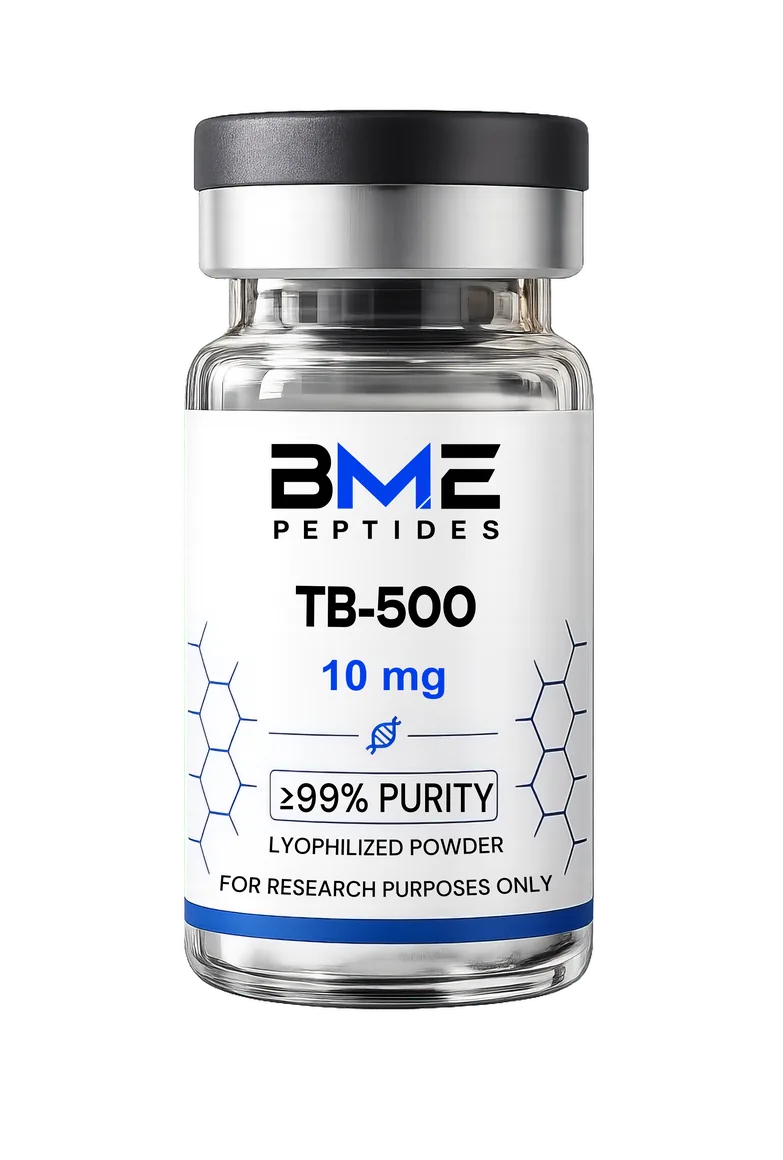
Researchers studying TB-500 and GHK-Cu will find thematic overlap, as all three are studied in tissue-repair contexts, but BPC-157 has the deepest literature specifically focused on tendon, ligament, and gastrointestinal healing.
3. Tendon and Musculoskeletal Healing
Tendon and ligament models are among the most studied areas in BPC-157 research. In multiple rodent studies, BPC-157 treatment has been associated with faster healing of surgically severed or damaged tendons — including the Achilles and patellar tendons — with researchers observing improved histological structure, increased cell proliferation at the injury site, and faster restoration of tensile strength.
Muscle healing has been examined too. In models of muscle crush injury and muscle-to-bone healing, treated animals showed more organized tissue architecture and reduced fibrosis compared to controls. Bone healing studies have added another data point: BPC-157 has been associated in rodent models with improved fracture healing and increased callus formation.
A 2021 review published in PubMed examining BPC-157's wound healing activity discussed the compound's effects across skin, muscle, tendon, and internal tissues, noting cytoprotective activity mediated through angiogenic and growth-factor-related pathways.
4. Gastrointestinal Protection
BPC-157's origins in gastric biology mean gut-related research has always been a core focus. Studies in animal models have examined its effects on gastric and duodenal ulcers, bowel inflammation, fistula healing, and anastomosis repair.
In these models, BPC-157 has consistently been associated with accelerated mucosal repair, reduced ulcer area, and faster healing of intestinal lesions. It has also been studied in models of short bowel syndrome and colitis, where researchers found improvements in both structural healing and functional markers. The specificity of these findings to gastrointestinal tissue, combined with BPC-157's structural origin in gastric biology, has made this one of the most compelling research threads in its literature.
5. Wound Healing and Skin Repair
Beyond deep tissue, BPC-157 has been studied in standard wound-healing models. Dermal wound studies in rodents have found treated animals showing faster wound closure, improved collagen organization, and increased angiogenesis (the formation of new blood vessels that supply healing tissue).
Research published in PubMed Central on BPC-157's pharmacokinetics and distribution provides context on how the compound distributes in biological systems, relevant to understanding how it might reach and act on target tissues in experimental models.
6. Ocular Research
A more recent research area for BPC-157 involves corneal and ocular healing. A review published in PMC in 2023 examined BPC-157 as a possible candidate for glaucoma and other ocular conditions, noting its effects on intraocular pressure regulation and corneal repair in preclinical models. The authors identified angiogenic and cytoprotective signaling as relevant mechanisms in the ocular context.
7. Neuroprotection and Vascular Models
In nerve injury models, BPC-157 has been associated with improved functional recovery following crush injuries to peripheral nerves, with researchers noting faster axon regeneration and reduced deficit in motor and sensory tests. Vascular models have added another layer: BPC-157 has been studied in ischemia-reperfusion settings and thrombosis models, where it appeared to influence microcirculation and endothelial stability.
8. How It Works
The precise mechanisms behind BPC-157's observed effects are still being characterized, but the research literature consistently points to a few core pathways.
The most frequently cited is modulation of the nitric oxide (NO) system. Nitric oxide plays a central role in vascular tone, endothelial health, and tissue blood flow, and BPC-157 appears to influence eNOS activity (the enzyme that produces NO in endothelial cells). By doing so, it may
help restore vascular function in injured tissue — which in turn supports the delivery of nutrients and cells needed for repair.
Connected to this is activity through the VEGFR2-Akt-eNOS signaling axis, which governs angiogenesis. Growth of new vasculature into injured tissue is a rate-limiting step in healing for poorly vascularized tissues like tendons and ligaments, which may explain why BPC-157 effects are particularly notable in those areas.
Downstream ERK1/2 signaling and modulation of inflammatory pathways have also been described in the literature. The compound appears to act through multiple parallel routes rather than a single clean mechanism, a characteristic it shares with other naturally-derived or biologically-inspired peptides.
In terms of pharmacokinetics, research published in PMC has examined how BPC-157 distributes, metabolizes, and clears in biological systems. Findings in those studies inform researchers' understanding of how quickly the compound acts and how long its effects may persist in experimental models.
9. What Researchers Are Still Learning
BPC-157 has an unusually large body of preclinical evidence, but almost all of it comes from animal models, primarily rodents. Human clinical trial data is limited. Searches of ClinicalTrials.gov for BPC-157 return very few registered trials, and none with published Phase II or Phase III results in major therapeutic areas. That gap between the richness of the animal-model literature and the current absence of robust human evidence is the central unresolved question in BPC-157 research.
Whether the effects seen consistently in rodent injury models will translate to human tissue, and at what scale, remains genuinely unknown. The stability and apparent tolerability of the compound in animal studies give researchers a reasonable starting point for further investigation, but human translation is still a future step rather than an established fact.
There is also ongoing work refining the mechanistic picture. The NO system and angiogenic pathways are the best-characterized routes, but researchers continue investigating additional signaling cascades that may contribute to observed effects, particularly in gastrointestinal and neurological models.
Researchers interested in combining BPC-157 with other repair-focused compounds can find further context in the BPC-157 and TB-500 combination research overview and the multi-peptide research blends article.
10. How BPC-157 Compares to TB-500 and GHK-Cu
Among the peptides commonly studied for tissue repair, BPC-157 occupies a distinct niche. TB-500 (the research name for thymosin beta-4) works primarily through actin dynamics and cell migration, binding G-actin and facilitating the cytoskeletal reorganization needed for cells
to move into damaged tissue. BPC-157, by contrast, acts principally through vascular and cytoprotective pathways, particularly the NO system and angiogenic signaling.
GHK-Cu adds a third angle, focusing on extracellular matrix remodeling and copper-mediated antioxidant signaling, that complements rather than duplicates what BPC-157 and TB-500 do. Researchers studying overlapping or sequential effects of these compounds have found the mechanistic differences make them potentially interesting to study in combination, rather than as substitutes for one another.
11. Research Status and Sourcing
BPC-157 is not approved as a drug by the FDA, Health Canada, or the EMA. The FDA's compounding bulk substances list includes BPC-157 as a substance under consideration, and Health Canada specifically identifies it among injectable peptides found on the market under "For Research Use Only" labeling — noting that such labeling does not exempt products from Canadian drug regulations. It is also flagged as a substance of concern in sport by relevant anti-doping bodies.
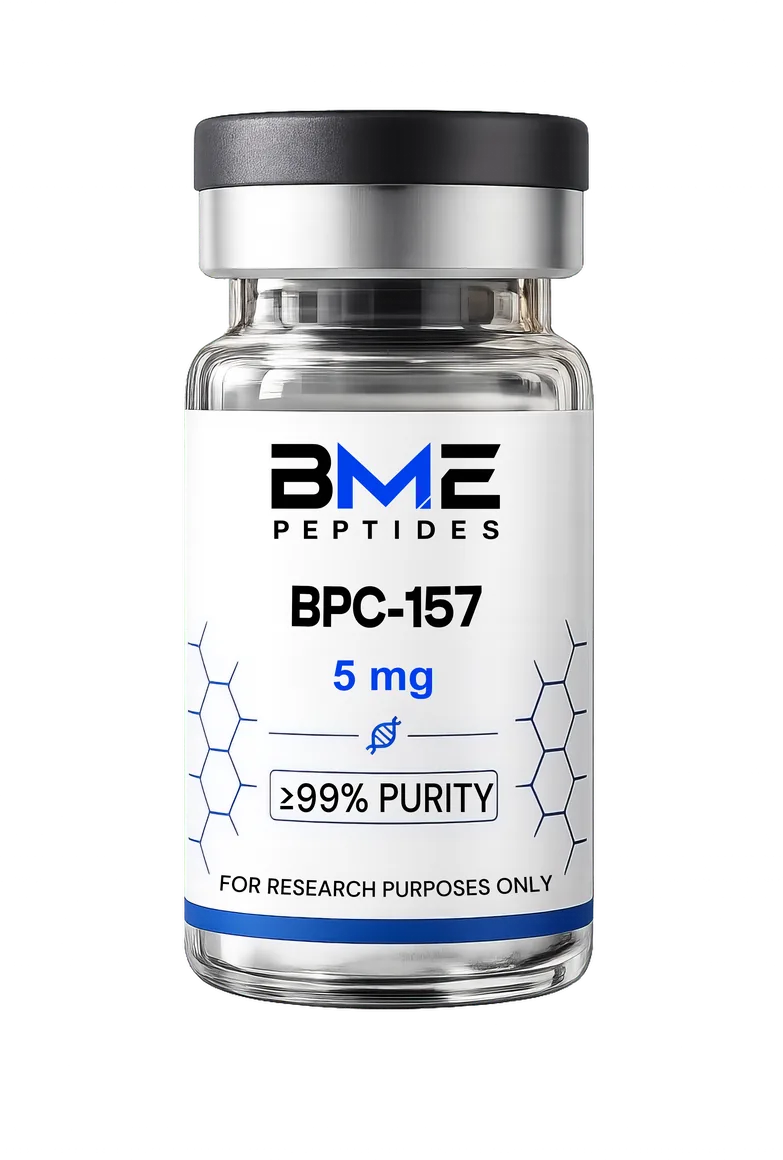
BPC-157 is available from BME Health in 5 mg and 10 mg formats, supplied as a research compound for laboratory use only.
This article is for educational and research purposes only and is not medical advice.
12. Frequently Asked Questions
What is BPC-157? BPC-157 (Body Protection Compound-157) is a synthetic pentadecapeptide (a chain of fifteen amino acids) derived from a protein sequence found in the gastric mucosa. It is chemically stable and has been studied extensively in preclinical animal models for tissue repair, gastrointestinal protection, vascular effects, and neuroprotection. It is not an approved drug in any major jurisdiction.
What has BPC-157 been studied for? Preclinical research has examined BPC-157 across a wide range of areas: tendon, ligament, muscle, and bone healing; gastric and intestinal mucosal repair; wound healing and skin repair; corneal and ocular healing; peripheral nerve recovery; vascular and microcirculation models; and inflammation and oxidative stress. The breadth of this literature is one of its distinguishing characteristics.
How does BPC-157 work? The most well-characterized mechanisms involve modulation of the nitric oxide (NO) system, particularly eNOS activity, and angiogenic signaling through the VEGFR2-Akt pathway. These pathways support vascular function and new blood vessel formation in healing tissue. Downstream ERK1/2 signaling and anti-inflammatory effects have also been described. The pharmacokinetics of BPC-157 have been examined in published research to understand its distribution and clearance.
What is the half-life of BPC-157? The precise half-life in humans has not been established from clinical trials, as BPC-157 lacks approved human drug status. Preclinical research on its distribution and metabolism is available in the published pharmacokinetics literature, including this PMC study, but these findings come from animal models and cannot be directly extrapolated to human pharmacology.
Is BPC-157 approved by the FDA? No. BPC-157 is not approved as a drug by the FDA. It appears on the FDA's list of bulk drug substances under evaluation for compounding, but it has not received approval as a therapeutic compound. It also lacks approved drug status from Health Canada and the EMA.
Is BPC-157 legal in Canada? Health Canada explicitly identifies BPC-157 as an injectable peptide sold illegally in Canada under "For Research Use Only" labeling. That labeling does not exempt the product from Canadian drug regulations.
What are the clinical studies on BPC-157? Registered human clinical trials for BPC-157 are very limited. Searching ClinicalTrials.gov for BPC-157 returns few results, and there are no published Phase II or Phase III trials establishing safety and efficacy in human populations. The current evidence base is primarily animal-model research.
Is BPC-157 banned in sports? Yes. BPC-157 is classified as a peptide of concern by anti-doping organizations and is prohibited under relevant anti-doping codes. It is not an approved medical treatment, and its use in competitive sport contexts is restricted.
13. References
1. Chang CH, Tsai WC, Lin MS, Hsu YH, Pang JH. The promoting effect of pentadecapeptide
BPC 157 on tendon healing involves tendon outgrowth, cell survival, and cell migration. J Appl Physiol. 2011. https://pubmed.ncbi.nlm.nih.gov/34201682/
2. Wang X, Pan M, Wen J, et al. Pharmacokinetics, distribution, metabolism, and excretion of
body-protective compound 157. Front Pharmacol. 2022;13:1037024. https://pmc.ncbi.nlm.nih.go v/articles/PMC9794587/
3. Sikiric P, Drmic D, Sever M, et al. Stable Gastric Pentadecapeptide BPC 157 — Possible Novel
Therapy of Glaucoma and Other Ocular Conditions. Int J Mol Sci. 2023. https://pmc.ncbi.nlm.ni h.gov/articles/PMC10385428/
4. Health Canada. Using bodybuilding products safely. Government of Canada. https://www.can
ada.ca/en/health-canada/topics/buying-using-drug-health-products-safely/safe-use-bodybuilding-prod ucts.html
5. U.S. Food and Drug Administration. Bulk Drug Substances Used in Compounding Under
Section 503A of the FD&C Act. https://www.fda.gov/drugs/human-drug-compounding/bulk-drug-su bstances-used-compounding-under-section-503a-fdc-act
6. ClinicalTrials.gov. Search results for BPC-157. U.S. National Library of Medicine. https://clinicalt
rials.gov/search?term=BPC-157
Shop this compound
Documented, batch-tested, and supplied for research use only.